
Type: Construction of single-family house
Client: Private
Location: Gafanha do Carmo, Portugal
Status: Ongoing
Project Author: Maria Fradinho
Team: Daniel Antunes
Project Date: 2025
Plot Area: 472,4 m2
Implantation Area: 123,5 m2
Construction Area: 151,5 m2
3D Artist: Alan Costa


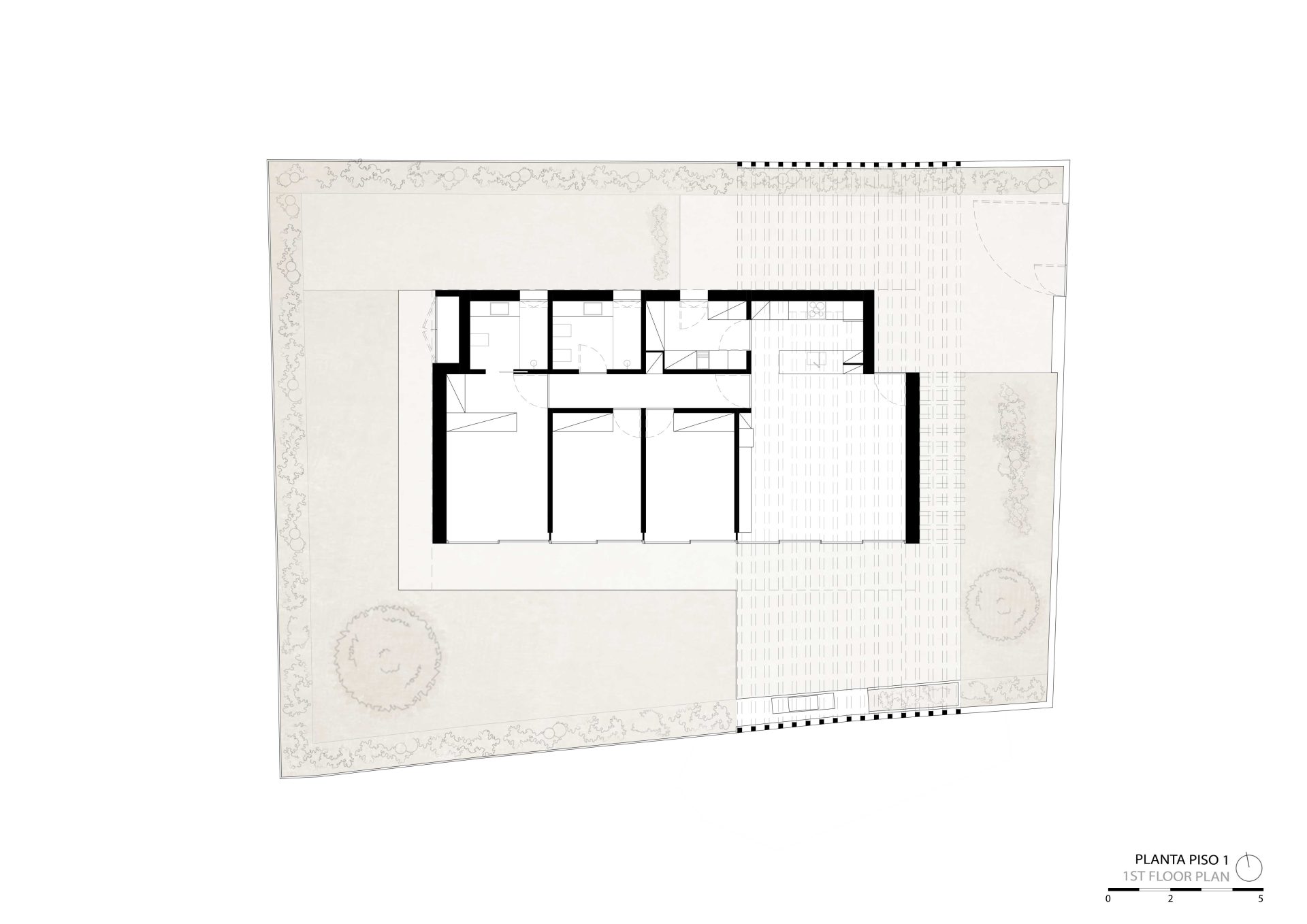
The house is proposed as a detached, monolithic rectangular structure with a single floor above ground level, with no plans for any annexes.
Built on a plot with a maximum depth of 25.82 m, but whose width did not support the programme requirements, it is proposed that the building be arranged longitudinally to the plot.
This is a compact house, where the layout is cohesive in order to focus on the essentials of family comfort.
The main access is from the wall bordering the public road, where pedestrian and vehicle access is provided, with two private uncovered parking spaces at the front of the plot.

The shape of the building sought to link the interiors with the exterior surroundings, ensuring a larger glazed area on the south-east side of the plot to make better use of the sun exposure. In this way, the building allows for a minimum distance of 4.1 m to the southeast to safeguard a useful patio in the sunny area, ensuring that the interior spaces meet the expectations of the adjacent exterior.
On the north-west side, the minimum distance to the boundary is also 4.1 m, to ensure comfortable outdoor parking and the planting of boundary hedges.
This house aims to extend beyond its interior boundaries, embracing the outdoor spaces as a single, useful and contiguous whole.


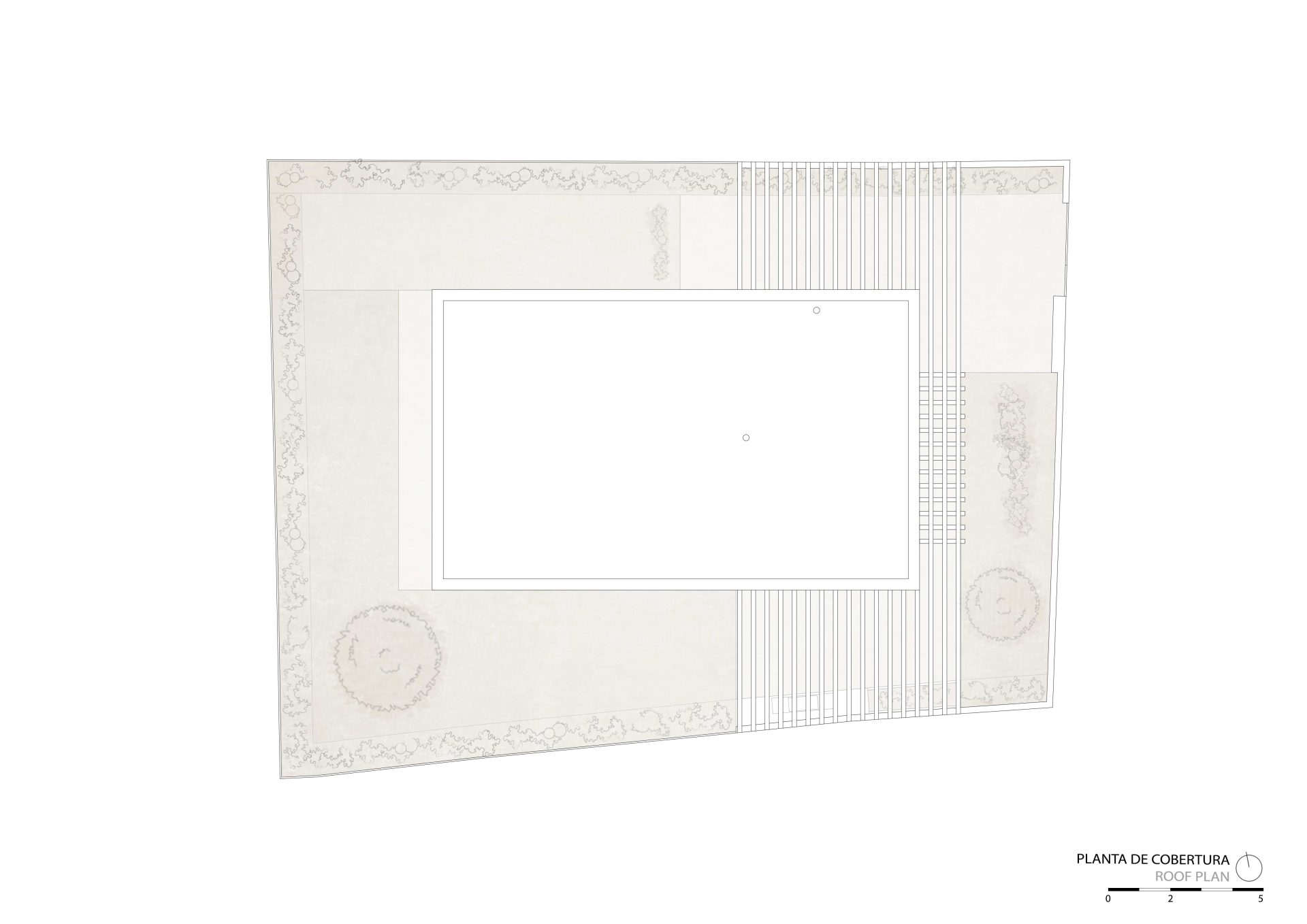
This is achieved through wooden pergolas that extend from one side of the plot to the other, crossing the house internally, where the wooden beam structure can be seen on the ceiling of the social area (living room and kitchen).
These pergolas shape this interior-exterior relationship, providing protection to the northwest for one of the private outdoor parking spaces, and to the southeast, sun protection for the outdoor area, which houses the barbecue area and mini vegetable garden.
These are interstitial elements that allow the architectural object to evolve in terms of form/use, according to need.
The premise is simple: to ensure that the dwelling has comfortable and protected outdoor spaces, without creating excessive covered areas, thus not compromising the gross construction area and, consequently, the construction costs.
The pergolas can be covered with climbing plants, which will enhance the relationship between this house and the natural outdoor space. The use of wood on the exterior has this very purpose, to safeguard the connection between this small urban house and the rural environment with which the owners identify.

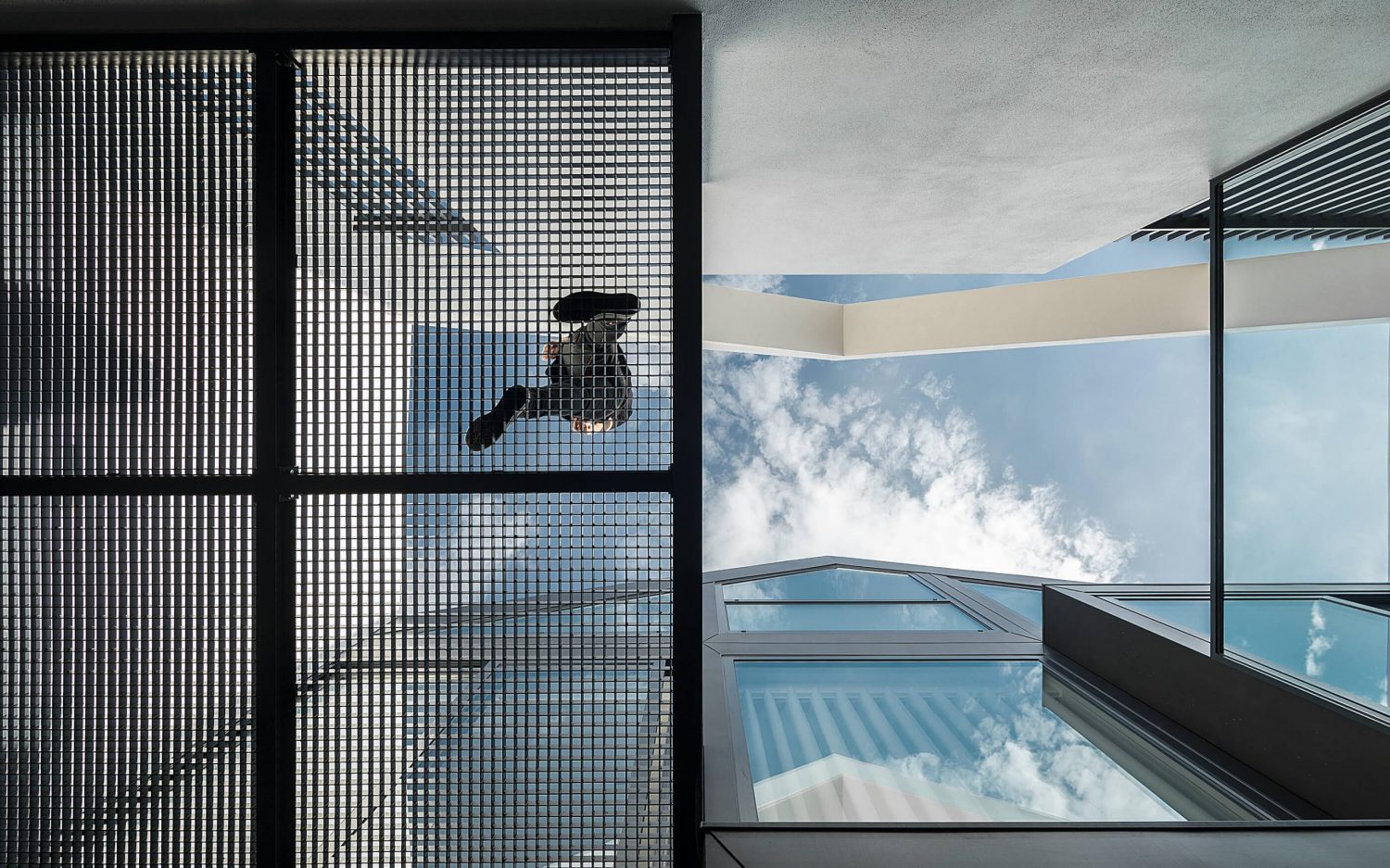
The materiality is marked by a white volume, occasionally covered with wooden slats that connect to the material of the pergolas. The chromatic simplicity is accentuated, as the intention is to let the green surroundings take centre stage.
It is, therefore, a simple building, strategically laid out to ensure comfort and proximity, without sacrificing the enjoyment of good interior and exterior sun exposure, as well as the desirable relationship between the interiors and its landscaped surroundings.