
Type: Construction of complex of three family houses
Client: Private
Location: Gafanha da Nazaré, Portugal
Status: Ongoing
Project Author: Maria Fradinho
Team: Daniel Antunes
Project Date: 2025
Plot Area: 1015,9 m2
Implantation Area: 466,5 m2
Construction Area: 548,2 m2
3D Artist: Alan Costa


The proposal aims to extend a single-family dwelling built in the 1990s, converting it into collective housing with three terraced houses.
In addition to minor alterations to the rear of the building, the original house will undergo changes to its exterior materials, with plans to replace the window frames, remove the tiles from the front façade, paint all façades and exterior ceilings, as well as the walls, and replace the exterior floor coverings. These changes will ensure a monochrome terracotta colour scheme.

The alterations to the exterior materiality of the pre-existing building aim to ensure a dominant image that can help integrate the various construction phases of the housing complex, creating a communicative identity between the pre-existing building and its current extension.
In turn, the extension will comply with this same materiality, with the image of the complex strongly marked by the terracotta colour, as well as by the sloping roofs with traditional ceramic tiles, similar to the roof of the original building.


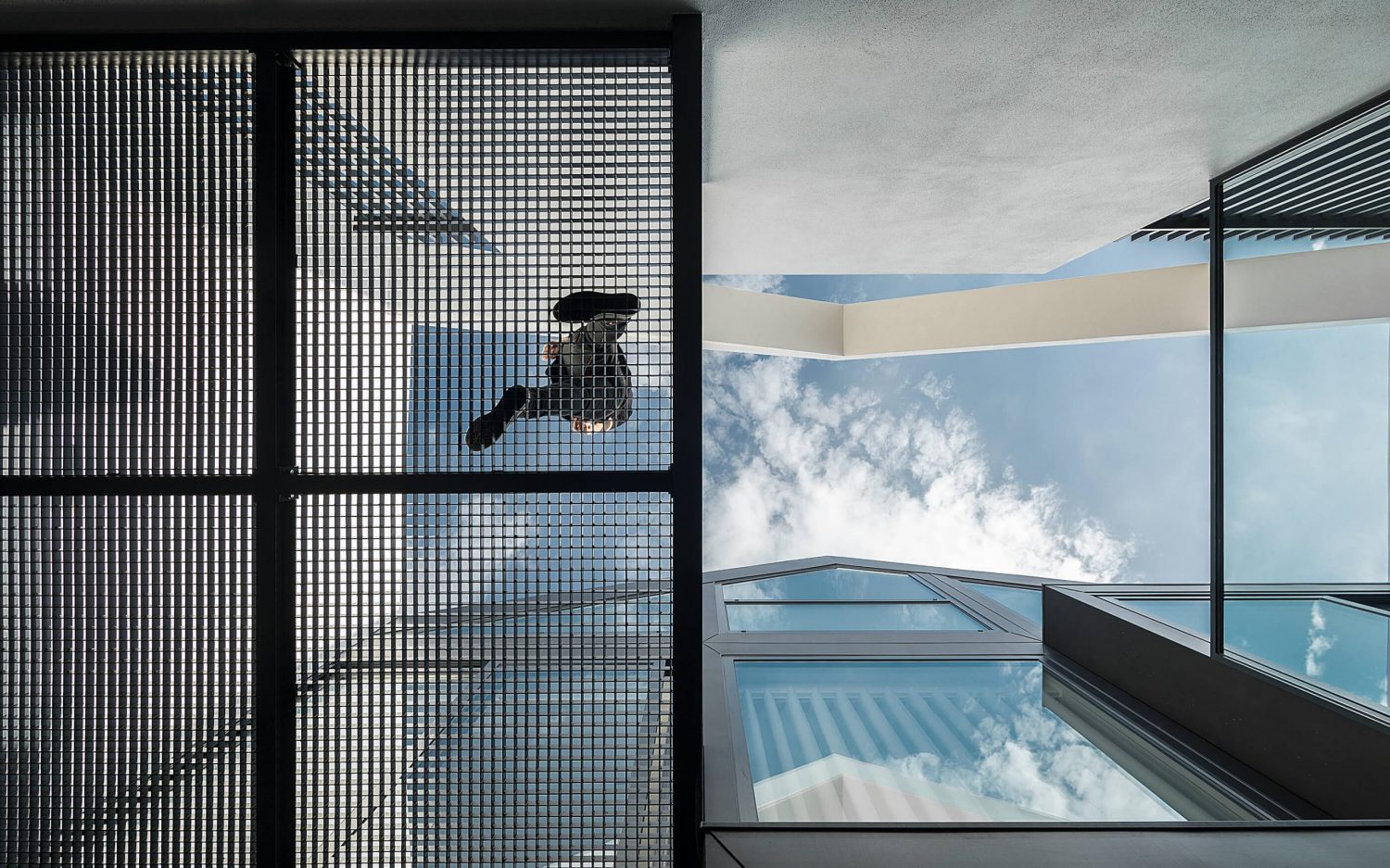
The volumes are separated by horizontally and vertically recessed structures. These separate the sections, dictating their properties and allowing the architectural ensemble to assume a more integrated character within the urban surroundings of single-family dwellings.
In addition to being recessed, these bodies also have a different materiality from the other volumes, which favours a tripartite reading of the complex. They separate and connect at the same time, as they belong to the private uses of collective housing, but help to define the independent fractions.
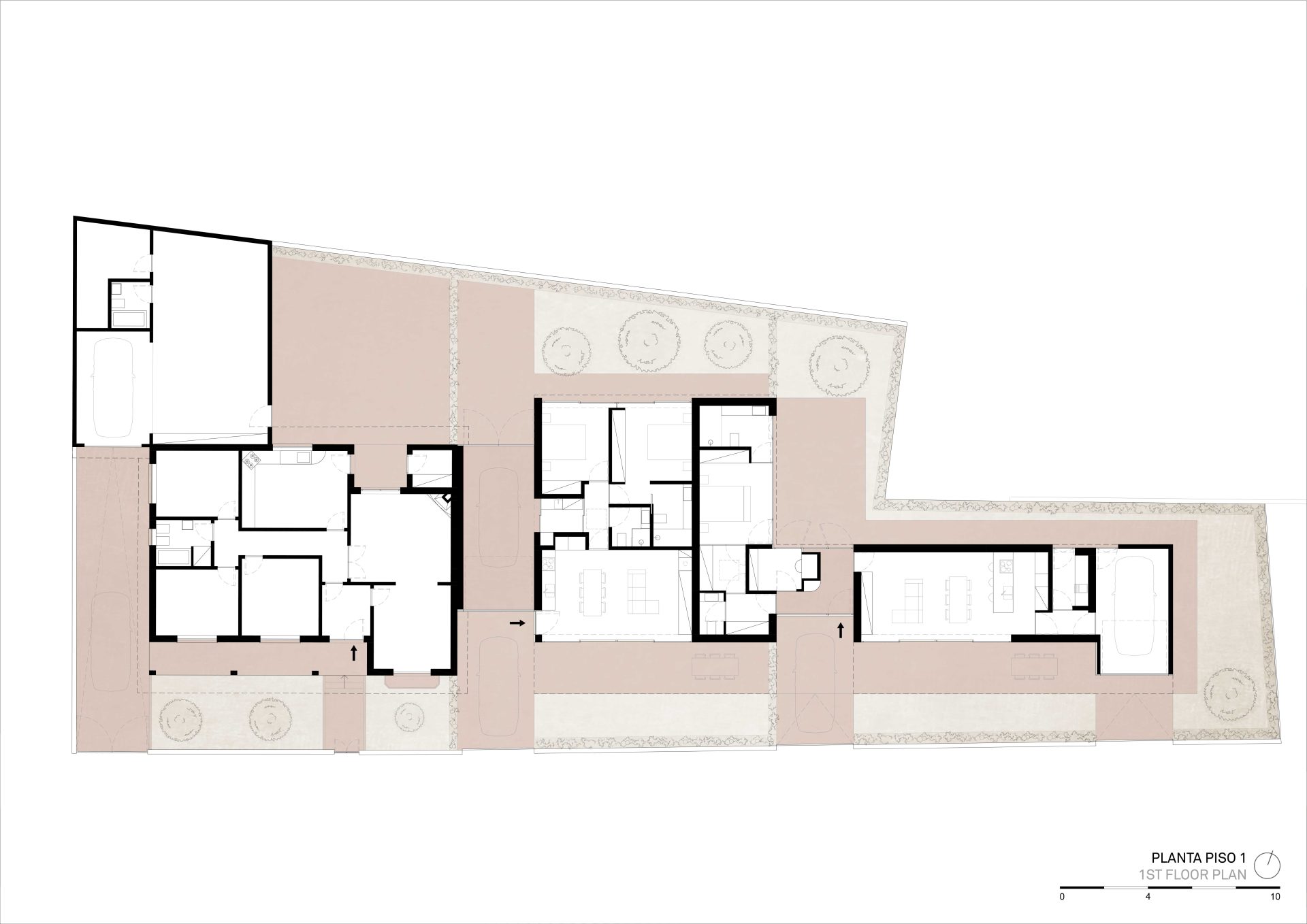
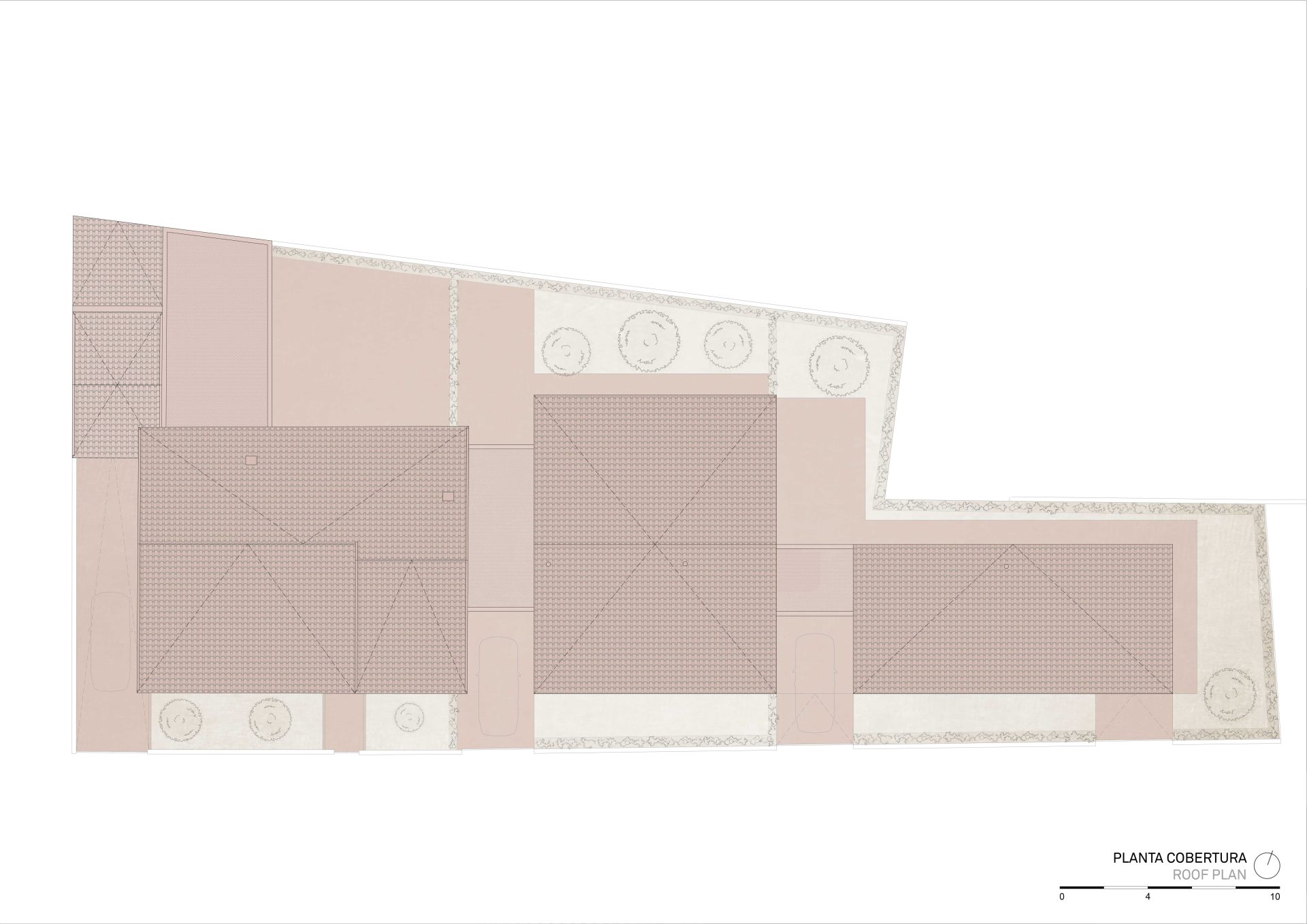
The distance between the extension and the public road, the alignment of the front eaves, the height of the façades and roofs, the materials, scale and shape of the front wall were meticulously determined in order to bring harmony to this complex, which, despite having been built in two different periods, will be seen as a single entity.


