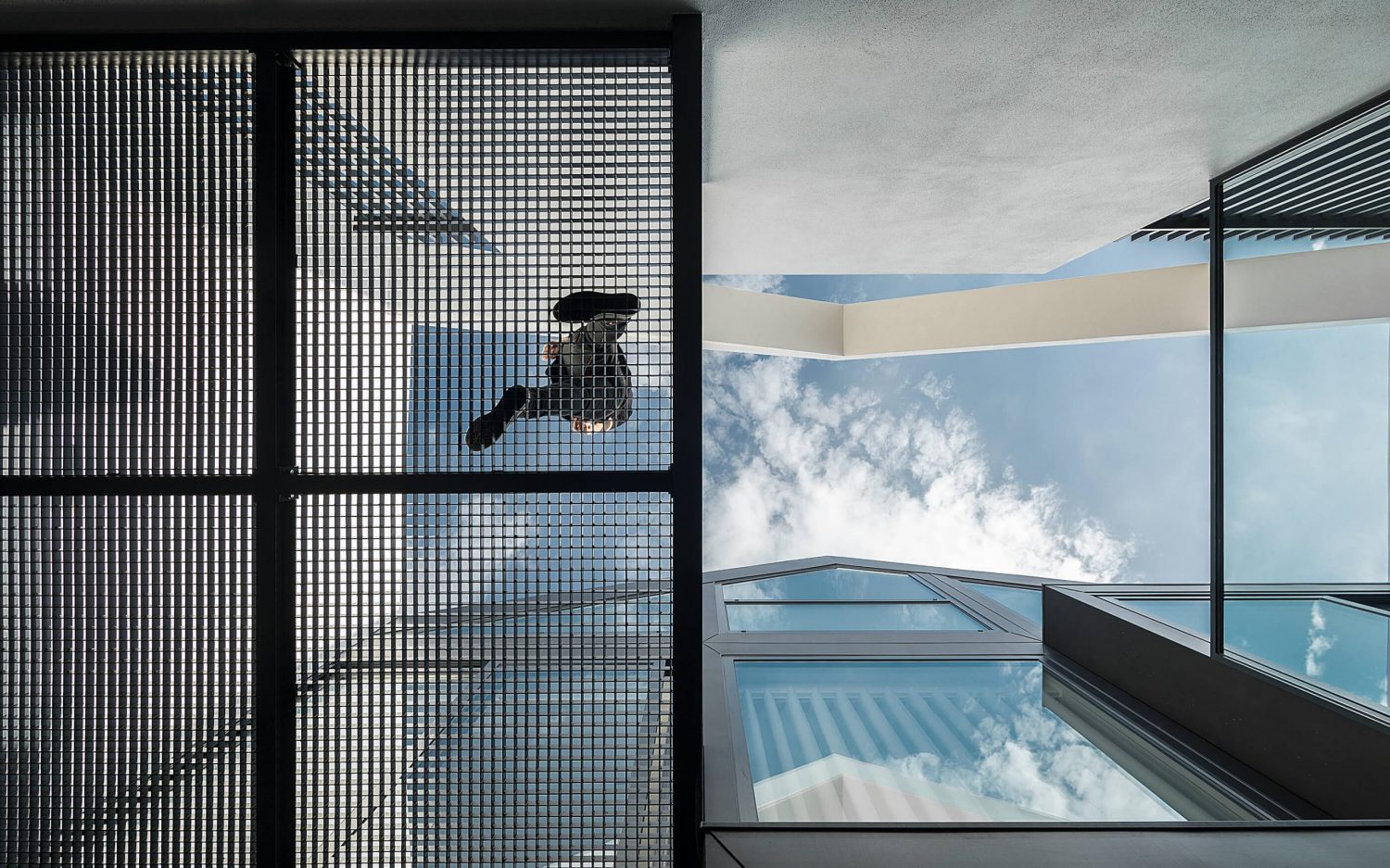

Type of Work: Single-Family Home Renovation
Client: Private
Location: Aveiro, Portugal
Project Author: Maria Fradinho
Architectural Licensing Team: Cristina Paião e Daniel Antunes
Architectural Execution Team: –
Specialties: Pedro Tavares
3D: Alan Costa
Project Date: 2026
Construction Date: –
Land Area: 97 m2
Implantation Area: 173 m2
Gross Construction Area: 183 m2
Photography: –


Fish House makes us reflect on the city and its distinct elements, which are intrinsically linked, as we read the city as if it were an urban palimpsest that marks and narrates different memories and stories.
It is located in the picturesque Beira-Mar neighborhood, which is part of the dense urban fabric of narrow streets and terraced houses in the historic center of Aveiro, with facades mostly covered with colorful, rhythmic tiles. The surrounding area is of historical and architectural interest, close to the Chapel and Square of São Gonçalinho and the Fish Market Square.

Thus, inserted into an archaic structure, the new proposal represents the desire for contemporary habitability, suggests the evolution of technique, and encourages respect for the historical and social context. Due to its proximity and visual alignment with the Chapel of São Gonçalinho, it is essential to understand it as part of the whole of its urban context. This is the evolution and dynamic process of the city, which gives continuity to its form and function.
The proposal is developed in a homogeneous piece, a single longitudinal body, which follows the shape of the plot, reflecting a terraced house. It is proposed to build an open patio occupying the entire front yard, with a small green flower bed to finish it off and provide visual interest.
The three-story layout is maintained, but the interior layout has been significantly altered from the original design. Most of the existing partitions on the ground floor have been demolished, creating an open space for common use on the first floor, on the side of the front yard and with a clear connection to it. The private areas of the bedrooms are organized on the first and second floors.
Respect for the intervention area means that the intervention on the front elevation is subtle, ensuring harmony with its surroundings. We propose removing the illegally applied tiles, which are of no value, and suggest applying new tiles in the shape of sea-green scales, alluding to the theme of the building and its surroundings—the Beira-Mar neighborhood.
The most significant intervention is made on the rear elevation, where a light element is drawn over the large glazing that covers the entire façade—an aluminum structure formed by small scale-shaped elements. It is a second, permeable skin that allows for concealment and glimpses at the same time, or simply opens up to allow the house to interact directly with its courtyard. It takes on a contemporary and striking language.

The scales are grouped together to form a whole. They are open at their core to allow permeability and opaque in the alignment of the floor slabs, to define the scale of the building, revealing its interior heights and relating to the altimetry of the neighboring building. They will be made of matt white lacquered aluminum, measuring 20cm x 20cm, similar to the scale of the tiles applied to the facades of the historic area where the building is located. The color choice stems from the intention to emphasize the detail of the formal composition.
The roof of the building remains unchanged, with traditional ceramic tiles in their natural color.


The scales are grouped together to form a whole. They are open at their core to allow permeability and opaque in the alignment of the floor slabs, to define the scale of the building, revealing its interior heights and relating to the altimetry of the neighboring building. They will be made of matt white lacquered aluminum, measuring 20cm x 20cm, similar to the scale of the tiles applied to the facades of the historic area where the building is located. The color choice stems from the intention to emphasize the detail of the formal composition.
The roof of the building remains unchanged, with traditional ceramic tiles in their natural color.