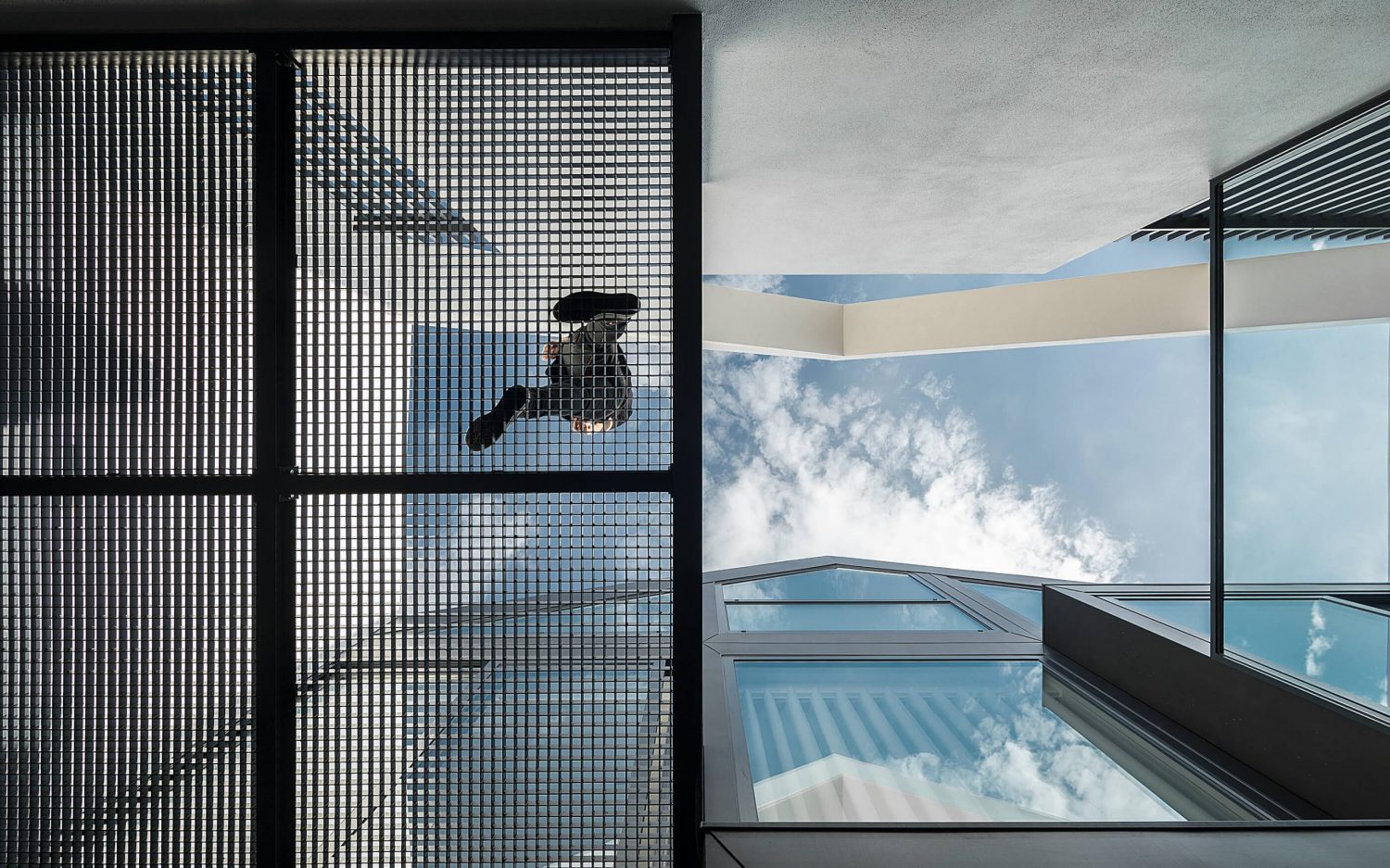

Type: Construction of a single-family house
Client: Private
Location: Palhaça, Oliveira do Bairro, Portugal
Status: ongoing
Project Author: Maria Fradinho
Team: Daniel Antunes
Project Date: 2024
Plot Area: 665,9 m2
Implantation Area: 185,4 m2
Construction Area: 361,9 m2
3D Artist: Alan Costa


The Lattice House is located on the outskirts of Oliveira do Bairro, in Palhaça. It is proposed a distinguished design, contrary to neighbouring buildings, determining a south-facing building that enhances the natural light, yet facing the public road. For this reason, derived from the strategy of the site plan implantation, it’s necessary to create a transitional space.


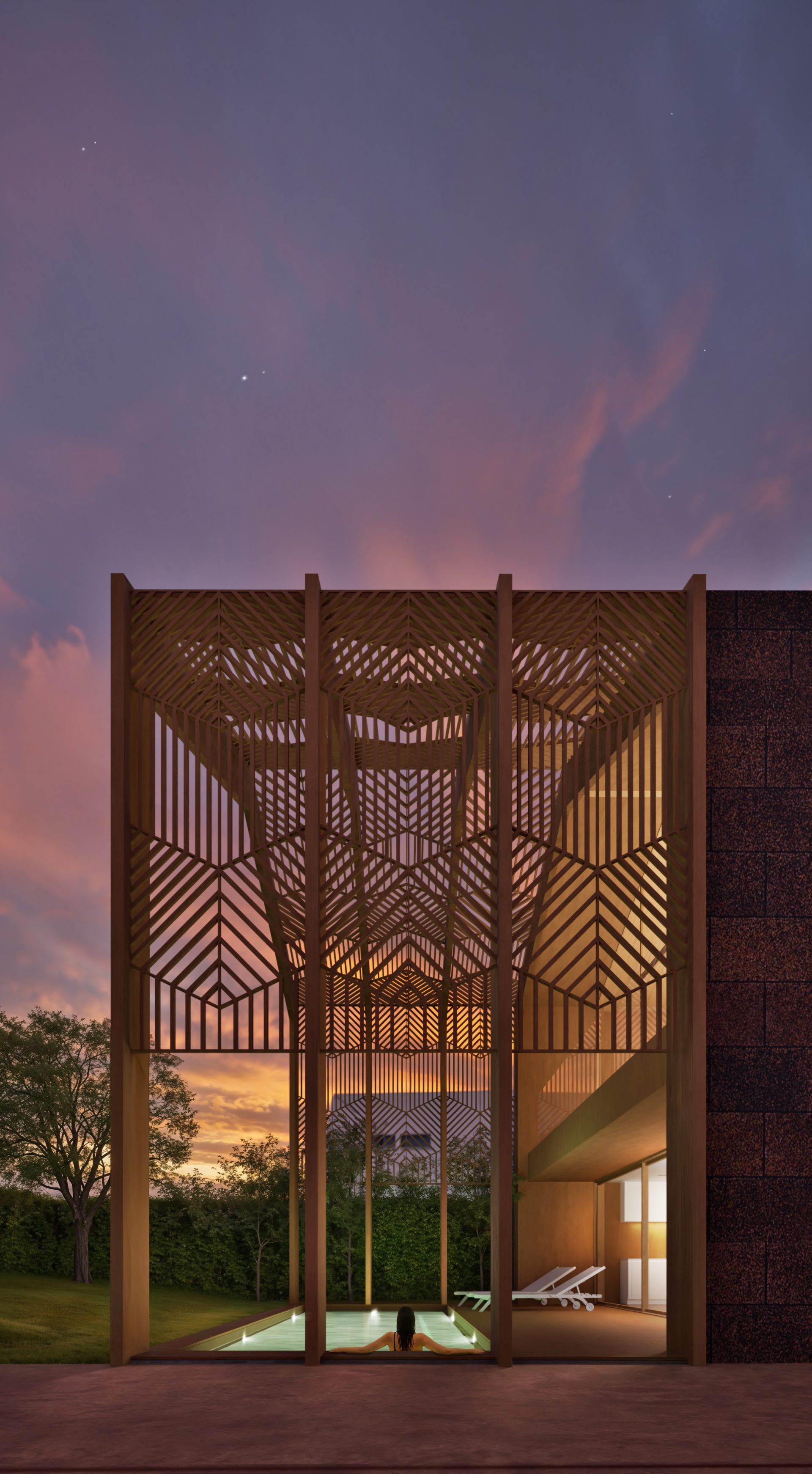
The connection between public and private space is made in a subtle and successive way. It is clearly defined where it begins and ends, by the presence of a green wall and a garden that embraces the public road, and the lattice whose shadow penetrates the interior spaces. The transitional space establishes both realities, so the architectural object is fluid as one body.
At a conceptual level, it is proposed a longitudinal volume, with a regular shape and metric, with two-storey level, and a gable roof.
It is imperative to maximize the lot occupancy, to set back the front façade and to position the swimming pool, garden and terrace south-facing to make better use of the sunlight and expand the space.
The interior of the building is set back to allow the house to gain a significant area for indoor-outdoor relations.

The exterior finishes are made from expanded insulation corkboard, both on the walls and roof. At the terrace area the walls are covered in natural wood panels. The windows’ frames and the interior finishes will be made of wood. Thus, the design is attentive to sustainability, integrating a thoughtful construction system and finishes comprising a carbon negative footprint.

The image of the building is achieved by a specific metric and rhythm of the timber structure – vertical elements – that rupture the idea of a longitudinal volume, due to its width-length proportion. These vertical elements are also located at the central area of the building, emphasising the main entrance and also its inner patio.

This patio is a poetic architectural element, and defines a space that is simultaneously inside and outside, free and enclosed, that contemplates the sky and the olive tree.
Just like it is the latticework, which is embodied in the architectural object. The functionality of this element is to create a moment of transition and to protect from solar exposure; but it’s defined beyond this meaning due to the aesthetic experience it promotes.
Its design is considered the main distinctiveness element of the building offering it its identity. It’s inspired by the olive branch, which is associated with a divine meaning, and personifies the symbiosis between nature and architecture.
The main access is made from the public road, through a path for pedestrian and vehicle use, that leads to the main entrance or the garage located at the back of the building (north side).
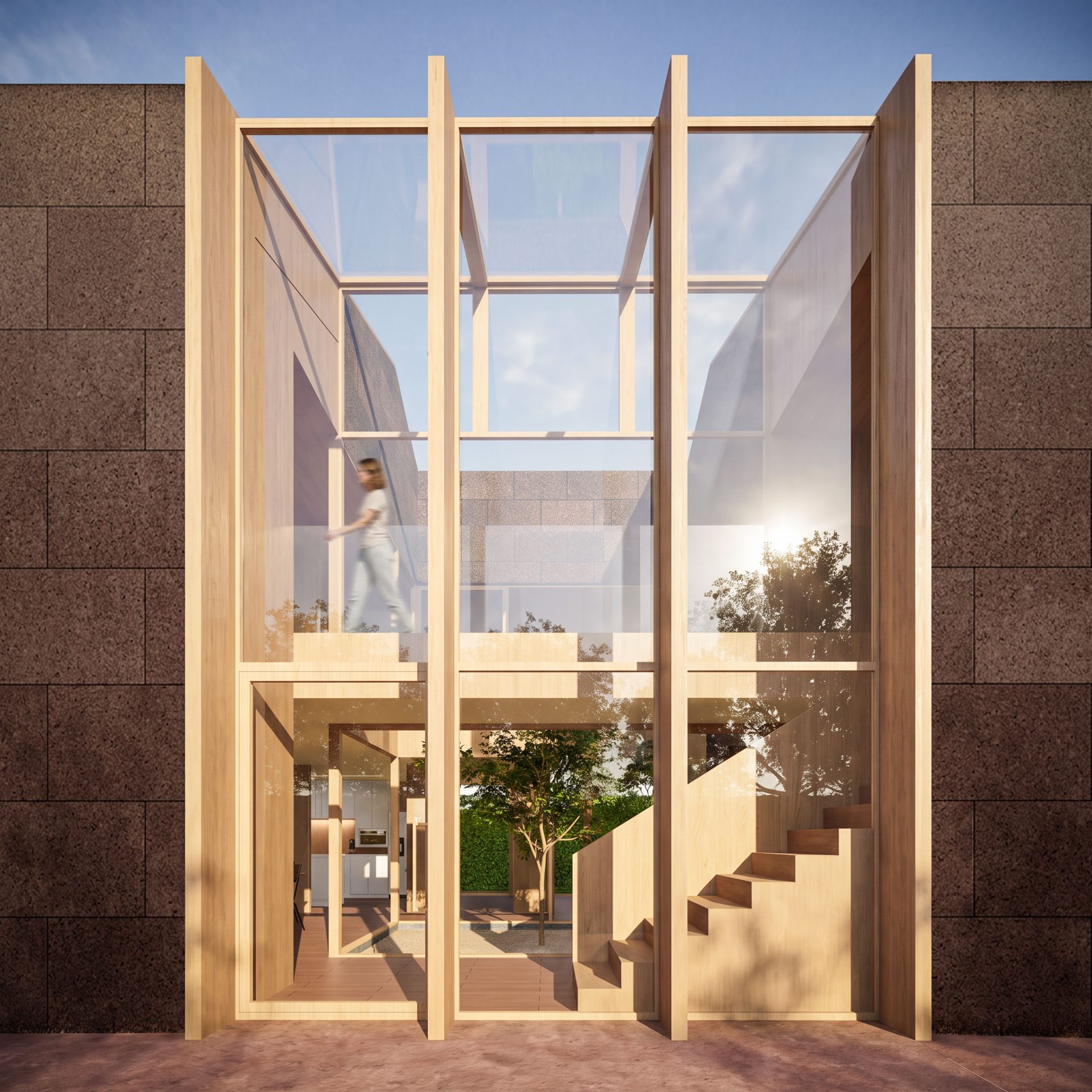
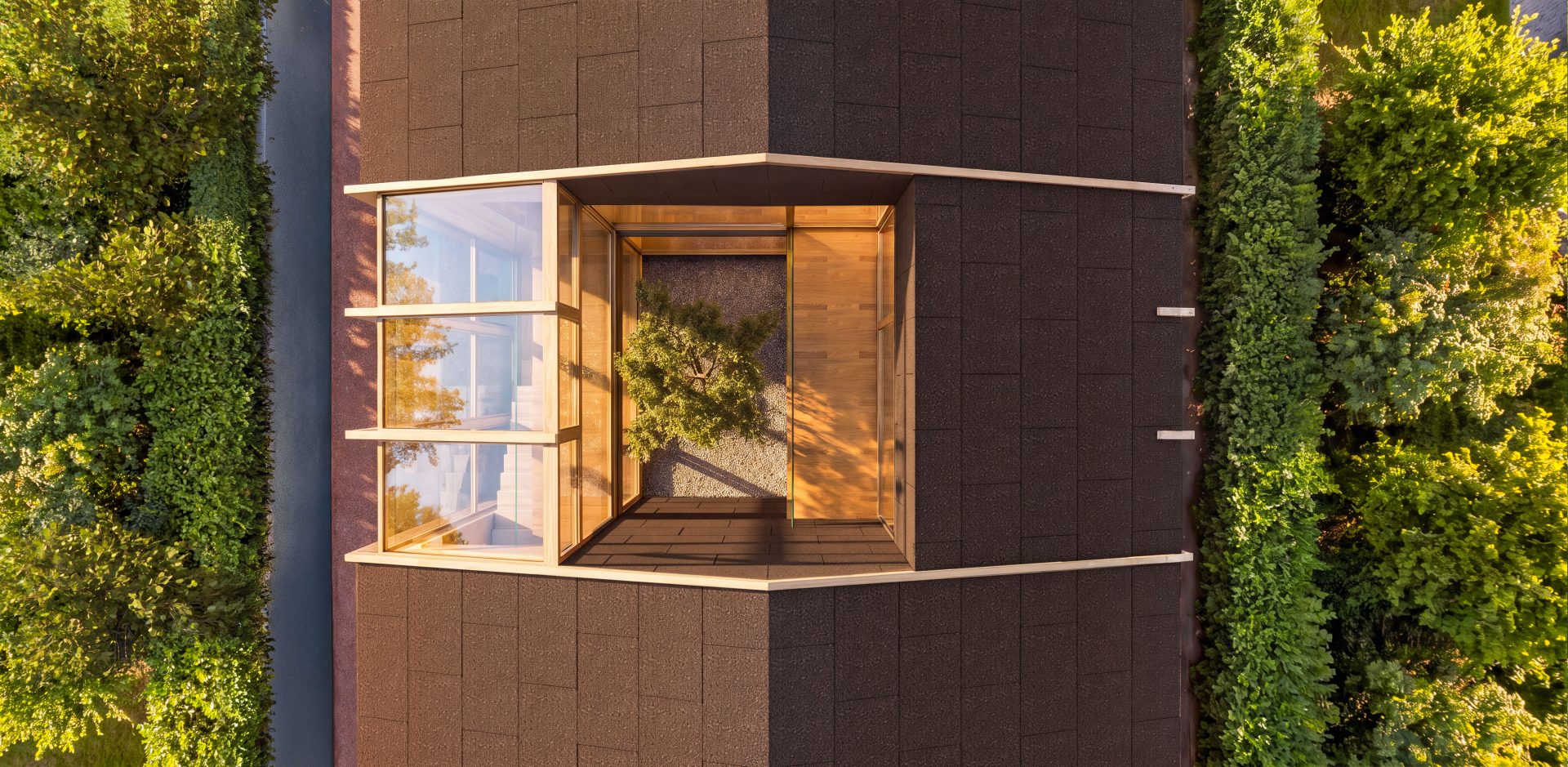
The entrance area is covered in glazing walls, including the roof. The transparency of this space also occurs through the void that is created to locate the inner patio, determining a second moment of interior-exterior transition.
The spatial organisation happens in this glass room. On the 1st floor it is organised the technical areas (north side), and the common spaces (south side). On the 2nd floor it is organised the private areas.
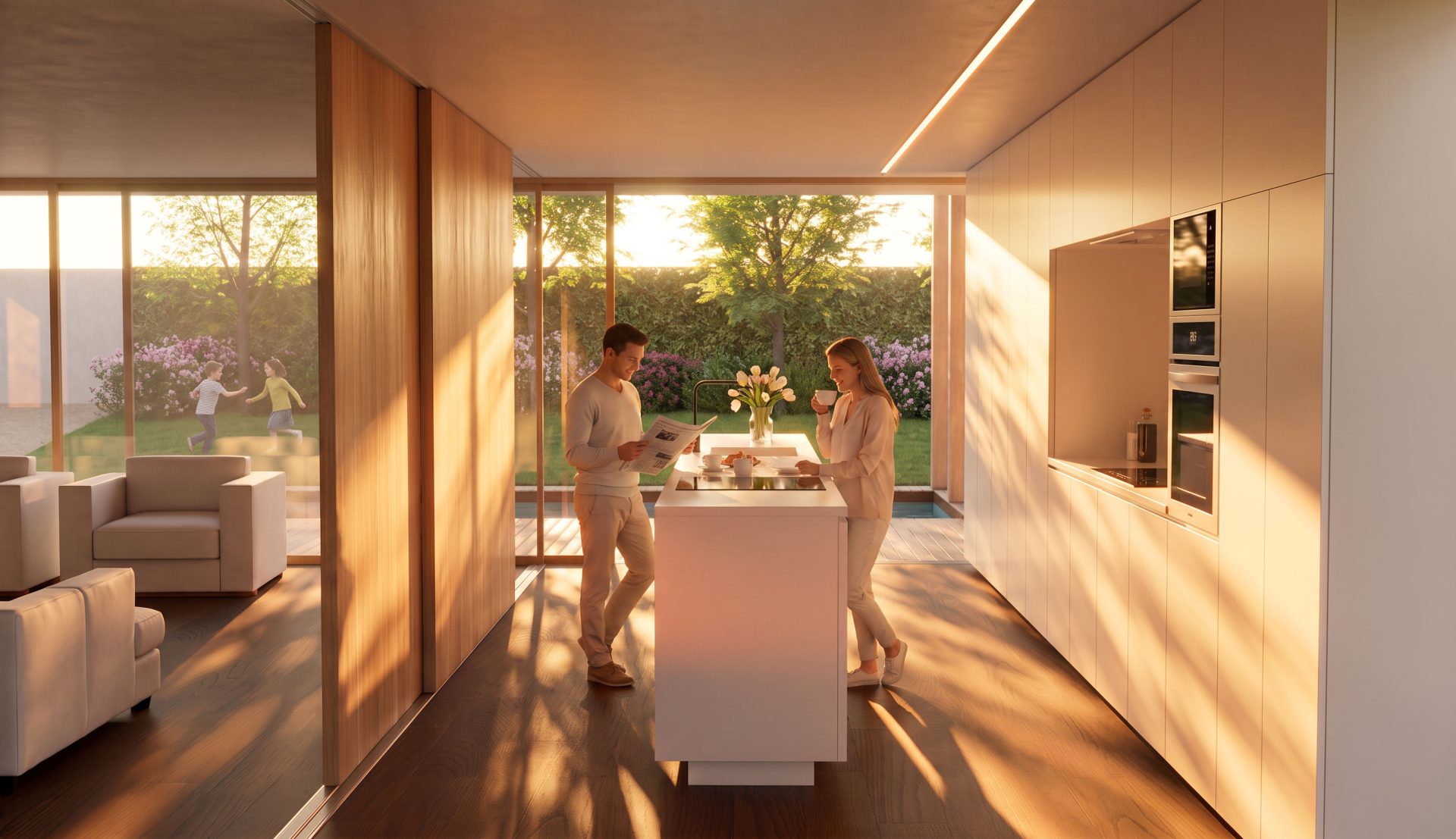
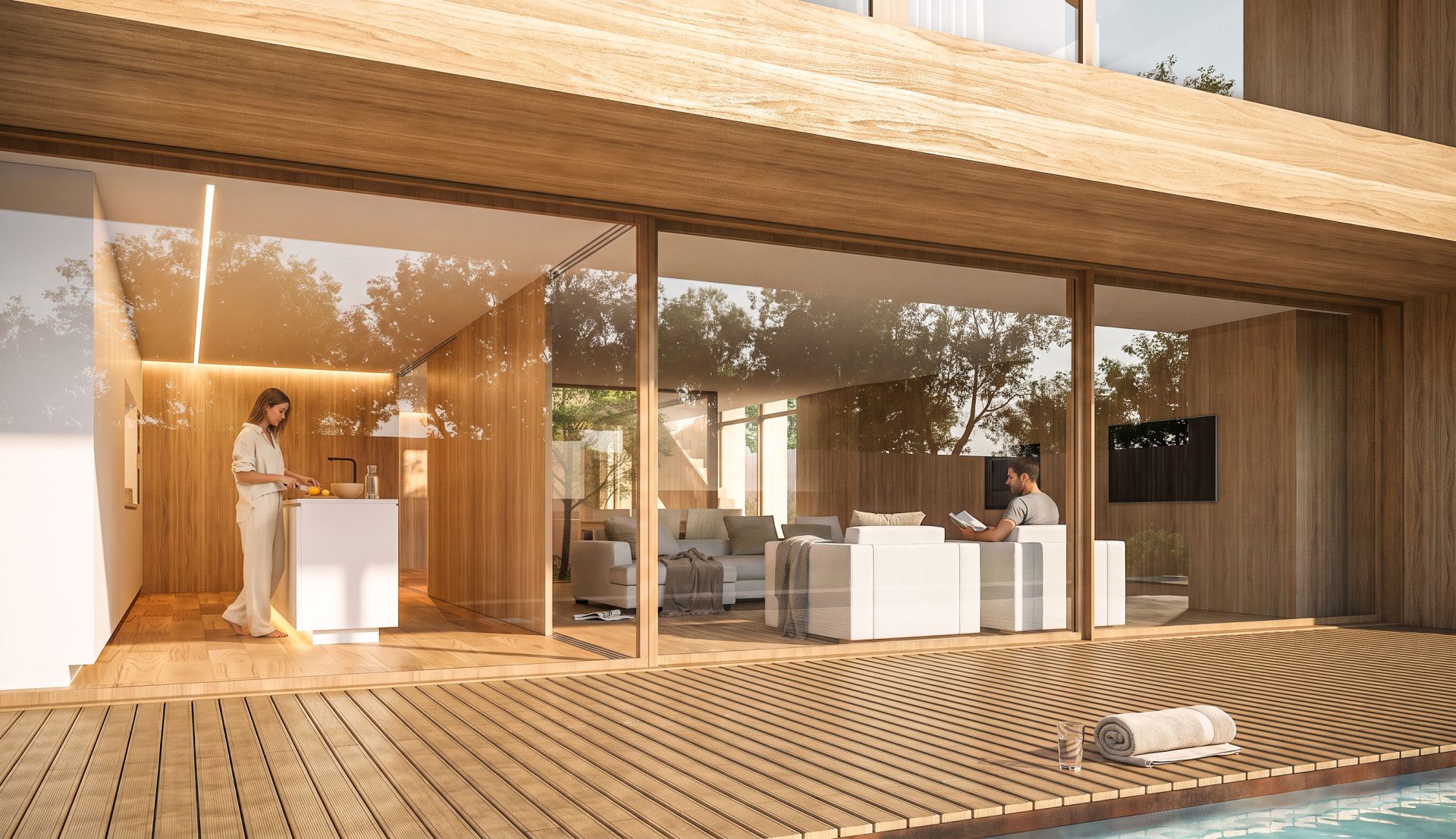
The Lattice House promotes the transcendence of architecture, choosing to invoke nature and to reduce its ecological footprint.


